


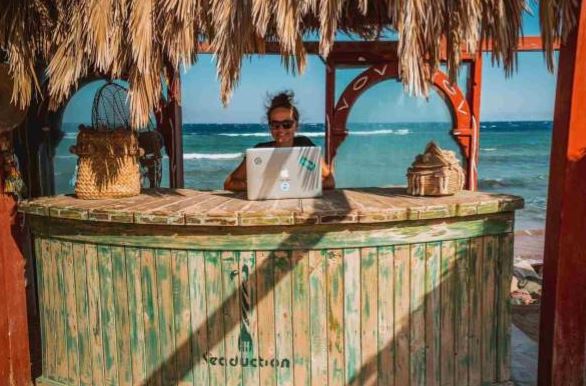
Digital nomads are people who have managed to crack the code of working outside the cubicles of a 9-5 job. On some days, you’ll see them sharing highlights from their recent trip to Tahiti. On other days, they’re on a beach in Bali or Malaysia, surrounded by clear blue waters and the most striking scenery. The lifestyle of a digital nomad is one many wish to have, but struggle with the concept of achieving such dreams.
Although these individuals might look like they’re living their best life, it’s important to remember that every day, they work hard to live these dreams. Here are some of the many professions funding their lifestyles.
Freelancing
The first and most convenient job you’ll find most nomads in is freelancing, and this cuts across several ranges of markets. Writers, editors, graphic designers, virtual assistants, and many other professionals have the leverage of working remotely in today’s markets. The opportunities available in the industry have increased since the COVID-19 pandemic. As of
2022, the global remote workplace service was valued at $19.79 billion, and predictions reveal that it might grow $100.03 at a compounded annual growth rate of 23% by 2032. The Malaysian market is definitely part of this development – the country reported about 2.97 million freelancers registered in 2023, accounting for 18.2% of the country’s workforce.
The sheer number of professionals working from home has increased drastically, and digital nomads are benefiting tremendously from this. As remote workers, they have the luxury of working from anywhere in the world, making money on the go, and building their careers while they travel. Some popular marketplaces that are helpful to this profession are Upwork and Fiverr. These platforms allow freelancers to connect with a wide range of clients from across the globe.
Entrepreneurs and Creatives

People in the e-commerce fields, marketing, and other creative fields can also live a digital nomad lifestyle since they spend less time being physically present for work. E-commerce, drop shipping, and affiliate marketing, for example, are strictly carried out online as they involve selling products and services to online audiences. Other creative fields like podcasting, stock photography, and the sale of digital products are other options in this field. Traveling around the world presents the chance to capture your experiences on (digital) film and share them with others at a cost. Some nomads monetize their experiences through these professions and earn decently on the job
Trading

The financial investment market is another sector that offers a level of flexibility that suits the nomadic lifestyle. Forex and other investment classes can be traded from any location and are not bound by demographic constraints. The 24/7 accessibility of forex trading and other financial markets makes it convenient for nomads, regardless of the time zones they find themselves in. A Metatrader 4 Singapore trader operating on the GMT+8 can trade any asset, including those in the London time zones, as long as they can use the time converter appropriately.
Aside from time zone flexibility, investment professions do not require interaction with clients, employers, or other parties that might restrict their movement. The forex market is also known to be highly profitable and rewarding enough to afford being an expat. Individuals in finance sectors are able to travel conveniently, trade from any location, and still see the world.
Tech Professions
The tech industry is famous for being a flexible sector, with about 67.8% of its workforce working from home. You’ll find a lot of nomads who are technical workers and creatives, like software engineers, web developers, and IT professionals. Many of these individuals work
from their laptops and rarely have to show up for work physically. As long as they have access to an internet connection, it’s easy to do their jobs anywhere.
Tutoring
Online tutoring is one remote job that’s starting to gain more ground. The global online tutoring industry was estimated at $10.42 billion in 2023, as reported by Grand View Research. There are several factors driving this growth. For one, there is an increase in demand for specialized online learning services. Also, many professionals are seeking new ways to monetize their knowledge. Hence, the growing demand matches the supply of talent. According to JobStreet, online tutor jobs in Malaysia pay RM50-100/hour for any subject in the local and international curriculum. That’s more than decent pay if you can work about 30-40 hours weekly. Working these hours provides the flexibility to engage in other activities as a nomad.
Starting Your Digital Nomad Career
There are many job opportunities to explore in freelancing, tech, business, and the investment market as a digital nomad. The best part is that so many of these skills can also be learned virtually. If you find anything that resonates with you, make use of learning tools like Udemy and Coursera and begin building your knowledge. You could also be spending your next years traveling the world and building a career in a profession that you love.


